
Cooking together without phones: keep the recipe in reach
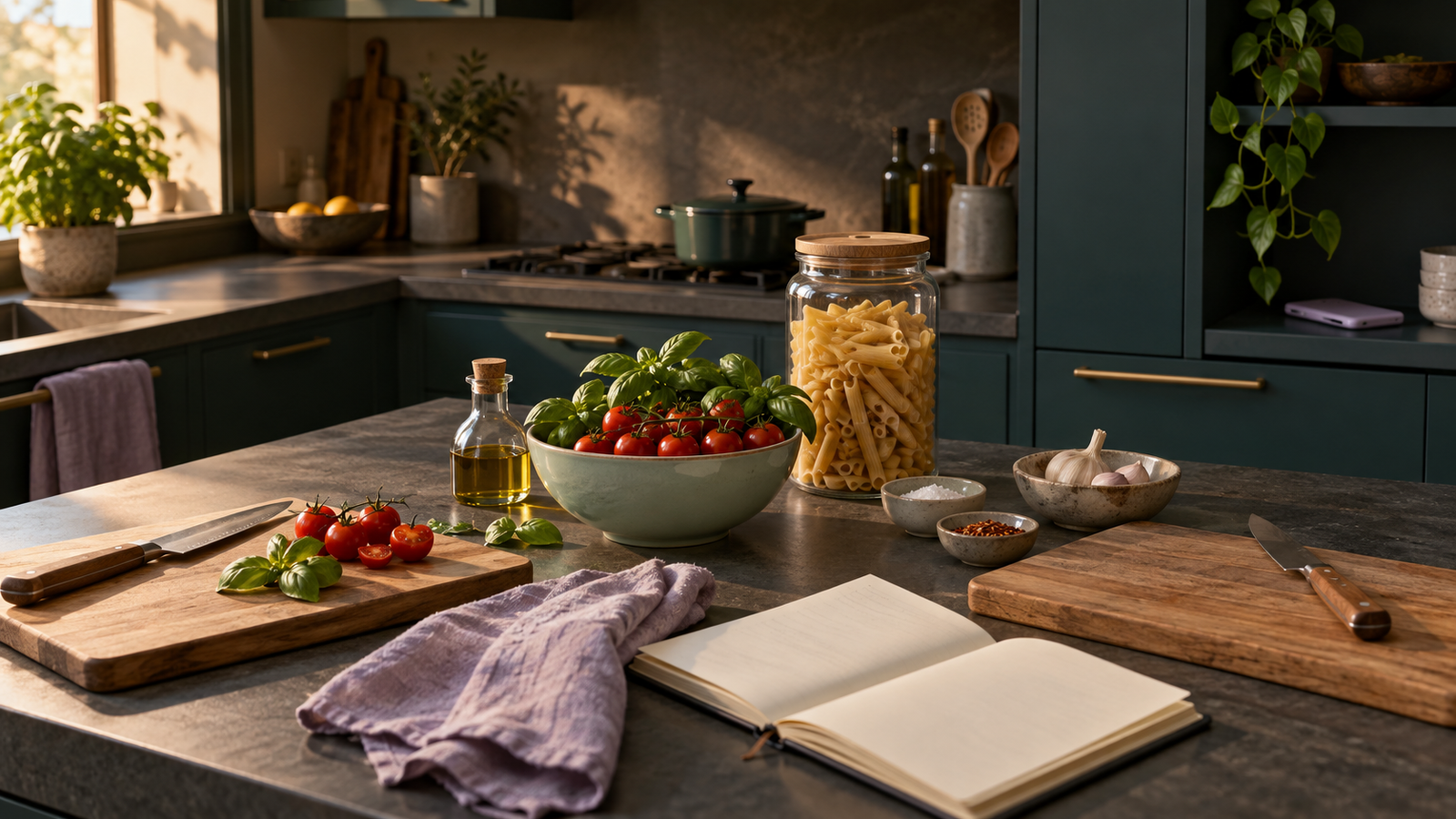
To cook together without repeatedly checking your phones, make the recipe easy to reach before you start. Use a cookbook or a complete printout, then write down who is doing which part. If a phone is your most useful way to read the recipe, keep it available for that job and choose which other uses you want to pause.
The aim can be as small as preparing one meal together with fewer unrelated checks. You don't need a complicated dish, matching phone settings or a completely screen-free evening.
Choose a meal you can both follow
Pick something familiar enough that you won't need a video for every step. Before shopping, read the whole recipe together, including preparation, cooking and resting time. Choose a recipe that fits the time and equipment you have, rather than assuming two cooks will finish it twice as fast.
Ask which part each person would like to handle. One might want to cook while the other prepares a side. If one person is less confident, offer a specific job and the instructions for it. Taking turns choosing the meal is another option; neither person needs to become the other's supervisor.
Keep the full recipe available
A printed recipe or cookbook lets you look back without opening your phone. Check that the ingredients, quantities and all the method steps are present. Keep the source's cooking guidance intact. The short note below is for coordinating your work, not replacing the recipe.
No printer? Write out the recipe you need before cooking, or leave it open on one phone in a dry spot away from the stove. Each person can choose whether to put their own phone aside. Using a screen reader, magnification or another accessibility tool can stay part of the plan.
Choose how you'll track cooking times too. Use the kitchen timer you already have, or set a phone timer when the recipe calls for it. Say what each timer is for and who is watching it. If you need to look something up, pause that step and check the source rather than guessing.
Copy this cooking note
Put this beside the full recipe. Fill it in together before turning on the heat. A few clear lines are enough.
Tonight's meal: _____. Full recipe and quantities are here: _____. We have time to start at _____ and would like to eat around _____.
I'll handle: _____. You'll handle: _____. The equipment we both need is _____. We'll use it in this order: _____.
Before I can do _____, I need you to finish _____. Tell me when it's ready by saying _____.
The timer for _____ belongs to _____. If someone steps away, the other person needs to know _____. We'll pause or simplify by _____ if needed.
Phone use we want to keep available: _____. Other phone use we'd each like to set aside: _____. The point when we'll revisit the plan is _____.
A worked example: pasta and a side salad
Here is an invented planning example, not a new recipe. Maya and Jules choose a familiar tomato pasta recipe and a simple salad. They keep the complete pasta recipe on the counter and follow its quantities and method, along with the pasta packet's directions.
Before they start
Maya chooses the sauce. Jules chooses the pasta and salad. They have one chopping board, so Jules prepares the salad vegetables first, then passes the board to Maya for the sauce ingredients. They check the recipe's timing before starting the pasta so it won't be ready while the sauce still needs substantial cooking.
Their note says: “Maya tells Jules when to start the pasta, based on the recipe. Jules handles the pasta timer and checks with Maya before draining. Keep any pasta water the recipe asks for.” This makes the handoff specific enough that neither person has to keep asking what's next.
Their phone choices
Maya leaves her phone on a shelf. Jules keeps his nearby because he is expecting a family call and uses its timer. They agree to leave messages that can wait until after cooking. Jules doesn't have to move his phone to the same place as Maya's to take part.
If the call arrives
Before stepping away, Jules says which step he has reached, how long is left on the timer and what needs attention next. Maya explicitly agrees to take over before he leaves the cooking area. If she can't manage both jobs, they pause the work that can wait and make the active cooking safe before he steps away. The salad can stay simple.
When Jules returns, he asks what is still needed. They don't restart their phone plan or add extra time to make up for the call.
Adjust the plan while you cook
If a missing ingredient sends you back to a recipe site, deal with that question before continuing the affected step. You can use the phone for the lookup, then return to cooking. A necessary check doesn't erase the time you've already spent together.
If one person starts giving more instructions than the other wants, ask: “Would you like a hand, or would you rather follow that part yourself?” You can change jobs. You can also decide that one person cooks tonight and the other joins for the meal.
If only one of you wants less phone use, make a plan for your own device and invite the other person to cook. Leave room for them to decline. The recipe and task note can still help you coordinate without making phone use a condition of joining.
Finish at a point that suits you
When the food is ready, decide whether to keep your phones aside while eating or end the plan there. For next time, name one practical adjustment: a recipe with fewer last-minute steps, a different division of jobs or a place where both of you can read the instructions.
If cooking isn't what you want to do together tonight, choose something else. River's activity list includes reading side by side, games and other ideas for time at home.
Explore screen-free date ideas at home.
For your next meal, start by putting the full recipe within reach. Then fill in the line about the handoff: what does one person need from the other before the next step can happen?
Back to all articles